

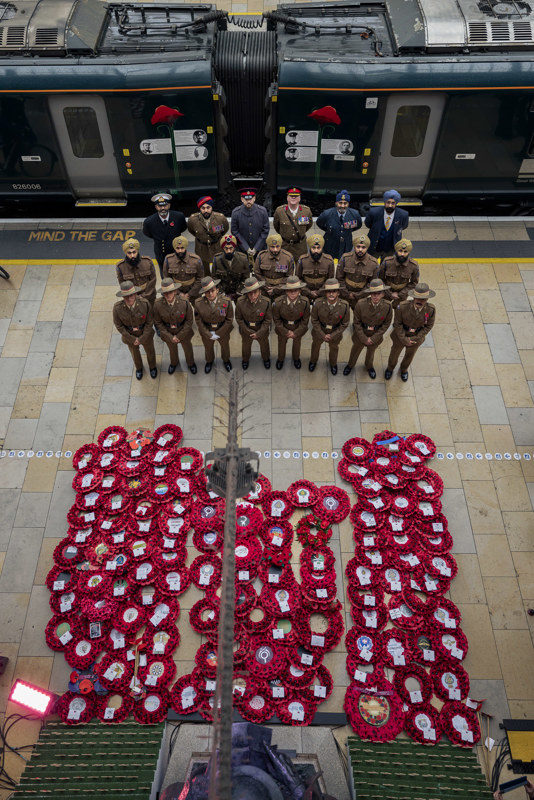
Poppy wreaths from communities across the Great Western Rail (GWR) network brought together at London Paddington train station.
Service personnel from The King’s Gurkha Artillery and the Defence Sikh Network represented those who served.
The service marked 110 years since the Battle of the Somme.
Soldiers from The King's Gurkha Artillery, along with military personnel and civil servants from the Defence Sikh Network: 1914 Sikhs, joined one of the GWR’s symbolic ‘Poppies to Paddington’ trains as they headed to the Armistice Day service in London today (11 November).


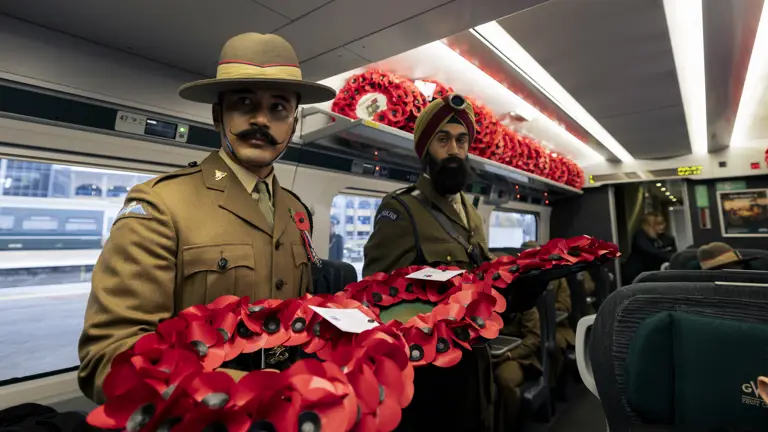
Soldiers from the Kings Gurkha Artillery (KGA) and Defence Sikh Network : 1914 Sikhs on board a train to Paddington Station.
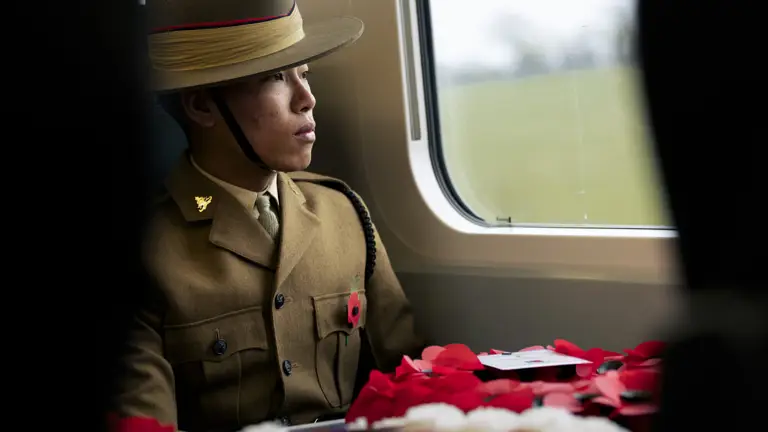
A soldiers from the Kings Gurkha Artillery on board a train to Paddington Station.
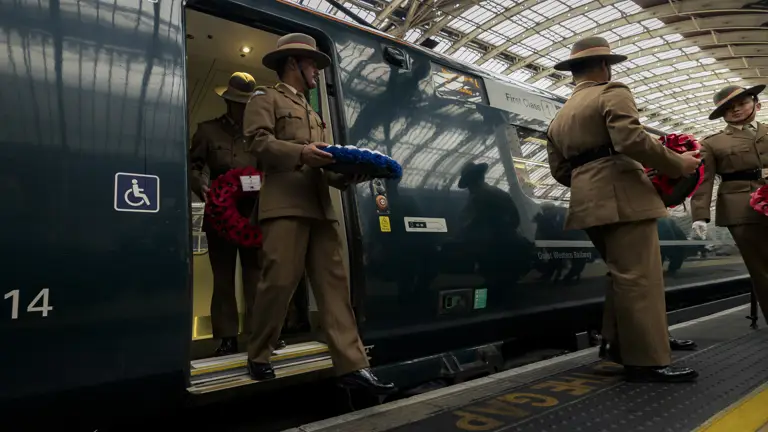
Soldiers from the Kings Gurkha Artillery and Defence Sikh Network : 1914 Sikhs arriving at Paddington Station.
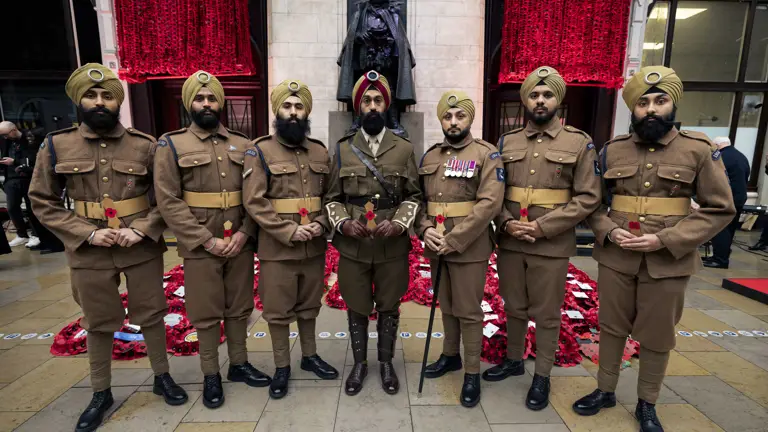
A group photo of Defence Sikh Network : 1914 Sikhs after the Poppies to Paddington Remembrance service at Padding Station.
The internationally recognised blood red poppies - a powerful image of remembrance and unity - were carried aboard early-morning trains from more than 60 stations across the GWR network. Along the route, representatives from the Armed Forces, civic leaders, veterans’ organisations, members of the public and charities, including the Royal British Legion and SSAFA, sent their wreaths to the capital for the Armistice Day service.
For those who serve today, it is essential that we continue to honour the sacrifice, courage, and service of those who went before us. Their legacy endures in the values we uphold and, in our commitment, never to forget.”
Colonel Jon Penhale, Assistant Commander, Joint Military Command South West joined one of the special trains.
He said: “It is a privilege to take part in this journey of remembrance. For those who serve today, it is essential that we continue to honour the sacrifice, courage, and service of those who went before us. Their legacy endures in the values we uphold and, in our commitment, never to forget.”
This year’s event marked 110 years since the Battle of the Somme during the First World War, when over one million men were killed, wounded, or missing on both sides. It also honoured those from the Commonwealth and wider global communities who fought alongside and gave their lives in service to Britain and her allies.
The ceremony at the Paddington Station war memorial was a reminder that service and sacrifice know no borders, bringing together people from diverse backgrounds, cultures, faiths, and nations in a shared act of respect and gratitude.
130,000 Sikh soldiers served in the British Indian Army during World War One and fought with fierce determination and distinction at the Battle of the Somme. German soldiers on the Western Front famously referred to them as the ‘Black Lions of Flanders.’
Remembering them means ensuring that their contributions continue to be recognised and honoured as an integral part of our shared history.”
Reflecting on the Great War, Warrant Officer Class Two Avi Sehmi, Royal Electrical and Mechanical Engineers, said:
“I think of the generations of Sikh personnel who served alongside their comrades in the British and Commonwealth Forces, often far from home and family.
"Remembering them means ensuring that their contributions continue to be recognised and honoured as an integral part of our shared history.”
He added: “It is also a time to recognise the families and communities whose lives were forever shaped by that service. Their collective legacy of courage, duty, and sacrifice continues to inspire future generations.”
Nepalese troops, known as Gurkhas, were part of The Indian Expeditionary force sent to France in September 1914, and earned a reputation for bravery, resilience, and professionalism.
While our roles have evolved to meet the demands of modern warfare, the values, professionalism, and fighting spirit that define the Gurkha soldier remain unchanged.
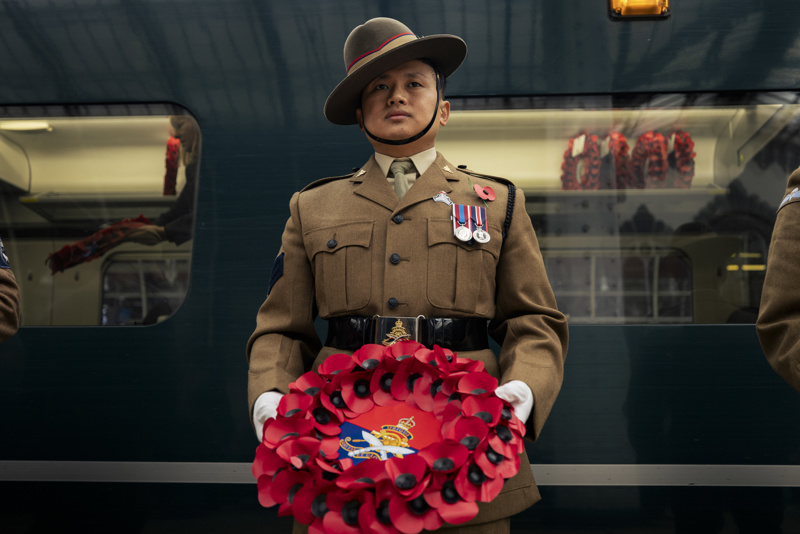
Bombardier Agam Rai, King’s Gurkha Artillery, the newest regiment in the British Army, said:
“A new legacy has begun, and I am proud to be part of this historic journey. Our forefathers earned a formidable reputation as warriors on the battlefield, demonstrating courage, loyalty, and excellence in warfighting.
“Today, the new era of Gurkhas continues that legacy with capabilities spanning Infantry, Logistics, Signals, Engineering, and now Artillery. While our roles have evolved to meet the demands of modern warfare, the values, professionalism, and fighting spirit that define the Gurkha soldier remain unchanged.
“We honour the achievements of those who came before us while forging a new chapter in Gurkha history for future generations.”
Since 2020, the Poppies to Paddington initiative has brought communities together through commemoration. Created by the Veterans Charity during the COVID-19 pandemic, the project ensured that remembrance could continue when many elderly veterans were unable to attend traditional ceremonies.
‘Related News Stories’

Remembering again the stirring sounds that accompanied D-Day landings

