

The Lions of England have pushed themselves to new limits training hard in the shadow of the iconic Mount Kenya.


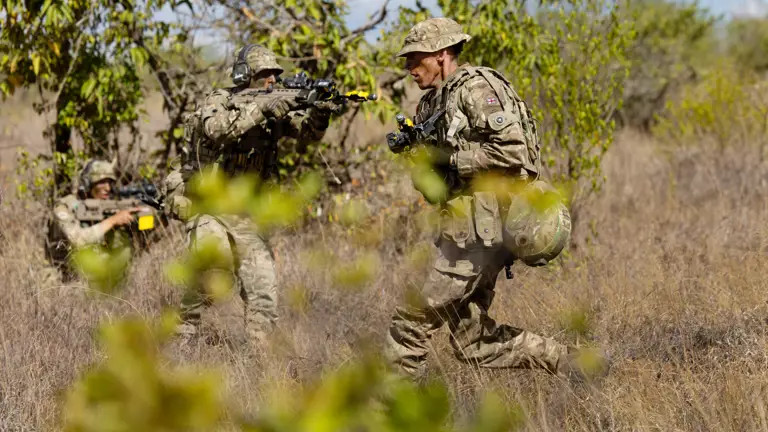
Soldiers from 1st Battalion, The Duke of Lancaster’s Regiment conduct infantry and live-fire training during Exercise Haraka Storm in Kenya.
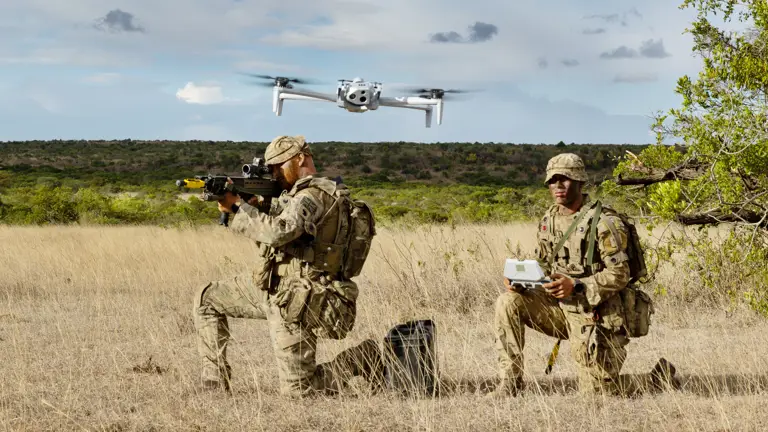
Soldiers from 1st Battalion, The Duke of Lancaster’s Regiment conduct infantry and live-fire training during Exercise Haraka Storm in Kenya.
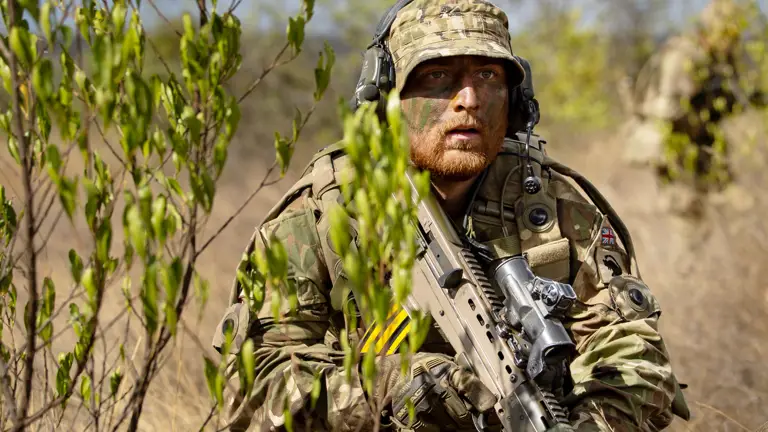
Soldiers from 1st Battalion, The Duke of Lancaster’s Regiment conduct infantry and live-fire training during Exercise Haraka Storm in Kenya.
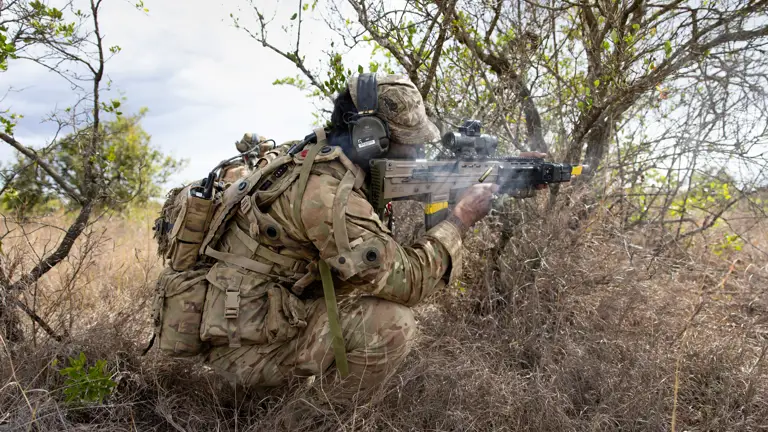
Soldiers from 1st Battalion, The Duke of Lancaster’s Regiment conduct infantry and live-fire training during Exercise Haraka Storm in Kenya.
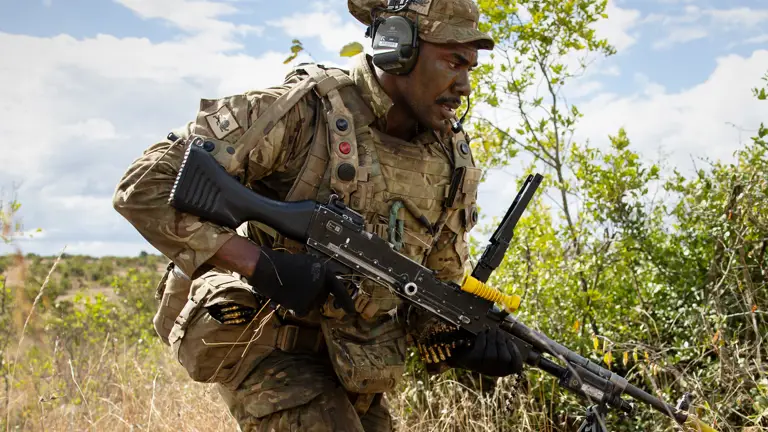
Soldiers from 1st Battalion, The Duke of Lancaster’s Regiment conduct infantry and live-fire training during Exercise Haraka Storm in Kenya.
1st Battalion, The Duke of Lancaster’s Regiment (1 LANCS), holds a key NATO role at high readiness to reinforce Europe’s Eastern flank as part of the Alliance’s Forward Land Forces Strategic Reserve, a force kept on standby to rapidly deploy and help defend Alliance nations if increased aggression or conflict breaks out.
A six-week deployment hosted at British Army Training Unit Kenya (BATUK), Exercise Haraka Storm is preparing them for operational deployment next year.
Members of Anzio (A), Burma (B) and Corunna (C) Companies work together under the Kenyan sun as the light role battalion transitions to a recce-strike posture being adopted across the British Army.
If the threat in Eastern Europe increases, we would deploy as part of 4 Brigade in support of Operation Cabrit.
Major Alex Postles-Kime, Officer Commanding C Company, explains: “1 LANCS Battlegroup will deploy on operations next year and this training fully validates us for that.
“This includes all the attachments that traditionally come with us, such as medics and logisticians, to get on the ground, exercise together and make sure when we do deploy, we are the best we can be.
“If the threat in Eastern Europe increases, we would deploy as part of 4 Brigade in support of Operation Cabrit [the UK’s contribution to NATO’s Forward Land Forces].”
The Kenyan landscape provides expansive open plains allowing troops to widen their arcs of fire when using live ammunition compared to training on home soil. The Battlegroup used it to sharpen their skills in ‘recce-strike’ capability.
Previously, infantry would find the enemy, then either fight them directly or call in support from elsewhere, like artillery or air power, often with a delay while information passed up the chain of command.
Recce-strike capability changes that by combining reconnaissance, finding, and tracking the enemy, with the ability to strike them quickly, sometimes using the same unit or the same piece of technology to do both.
Recce-strike allows us to have more effect on the enemy with less people.
Alex said: “Recce-strike is a relatively new concept. The whole of the Army is doing it slightly differently, which is great as it means we have a lot of different ideas and flexibility on what works best for everyone.
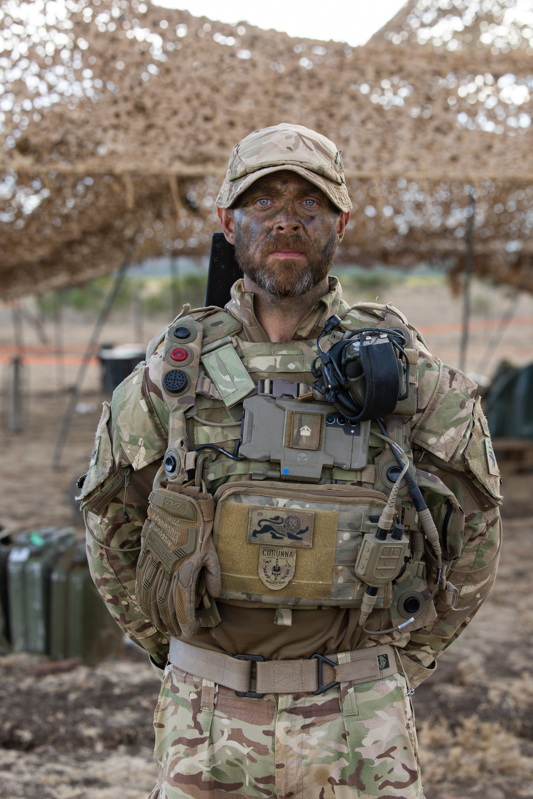
“For us, it allows us to have more effect on the enemy with less people, using more effective modern kit and equipment. In Corunna Company we have a dismounted strike platoon, a small team of infanteers with long-distance effect.
“We also have a UAS (unmanned aerial system) platoon which has both surveillance and strike drones, which have an explosive payload fitted and really increases the effect we have on enemy forces at platoon level.
“Additionally, the mortar platoon has moved over to this construct which is a big change. Traditionally, the mortar platoon would sit as a battlegroup asset at the rear mainly directed by the commanding officer.
“We’ve been given that asset within the company, which means I have organic fire support at my fingertips to allow us to really push forward.”
As the British Army continues to stride towards establishing itself as a 5th generation fighting force, aiming to double its fighting power by 2027 and triple it by 2030, the exercise provided the backdrop onto which 1 LANCS exploited their own advanced technologies.
The evolution in network communications is a massive game changer for us.
Alex said: “It’s really important. Over the last few years there’s been a massive change in terms of what is available and what can be countered.
“The evolution in network communications is something the British Army really needs. Systems that allow me to track my company, speak to them directly using a digital platform to enact command and control. It’s a massive game changer for us.”
Following the exercise, the troops can enjoy adventurous training like white water rafting, trekking, or cultural opportunities such as wildlife spotting Kenya’s world famous big five.
The British Army is recruiting right now to fill 10,000 jobs across the UK with more than 200 roles to choose from, covering everything from frontline combat and cyber security to helicopter pilots, chefs and support roles. If you’re aged 16 to 50 and if you want to find out more about a career in the Army, click Army Jobs website.